Rubber and TPO Roofing Solutions for Commercial Properties
When it comes to protecting commercial and multi-family buildings from the harsh weather conditions found throughout Greater Houston & the Brazos Valley Corridor, selecting the right roofing membrane is one of the most critical decisions a property owner or manager can make. At State Roofing Company, we have been a family-owned, premium roofing company since 1996, and we bring over 50 years of combined industry experience to every rubber and TPO roofing project we undertake. Our expertise with single-ply membrane systems ensures that your building receives a durable, energy-efficient, and long-lasting roofing solution tailored to your specific needs.
Single-ply roofing membranes, including EPDM rubber and Thermoplastic Polyolefin (TPO), have become the dominant choice for low-slope and flat commercial roofs across the United States. Industry data shows that single-ply membranes now account for more than 40 percent of the commercial re-roofing market, with TPO alone representing the fastest-growing segment over the past two decades. Property owners in Houston, Memorial, Sugar Land, Missouri City, College Station, & Bryan, TX trust us to deliver these advanced roofing systems with precision and professionalism.
Understanding EPDM Rubber Roofing
EPDM, or ethylene propylene diene monomer, is a synthetic rubber membrane that has been used in commercial roofing applications since the 1960s. Its proven track record spanning more than half a century makes it one of the most reliable and well-studied roofing materials available. EPDM membranes are manufactured in large sheets, typically available in widths of 10, 20, 45, or 50 feet, and in thicknesses of 45 mil or 60 mil. This flexibility in sizing allows our installation crews to minimize seams on your roof, which reduces the potential for leaks and extends the overall lifespan of the system.
EPDM rubber roofing offers exceptional resistance to ultraviolet radiation, ozone exposure, and extreme temperature fluctuations. These membranes remain flexible even in cold weather, which prevents cracking and splitting during sudden temperature drops common in Texas winter months. The material also demonstrates outstanding resistance to hail impact, a critical consideration for buildings in our service area. As an insurance loss specialist, we are fully qualified to work with insurance companies to satisfy storm claims for damages, including those affecting rubber roofing systems. We also offer 24/7 emergency service for situations where storm damage requires immediate attention.
TPO Roofing: Energy Efficiency and Performance
TPO roofing membranes represent the newer generation of single-ply roofing technology, combining the durability of rubber roofing with enhanced energy efficiency characteristics. TPO sheets are manufactured with a reinforced fabric scrim sandwiched between two layers of thermoplastic polyolefin, creating a membrane that resists tears, punctures, and impact damage. Standard TPO membranes are available in 45 mil, 60 mil, and 80 mil thicknesses, with the thicker options providing superior long-term performance for high-traffic rooftops.
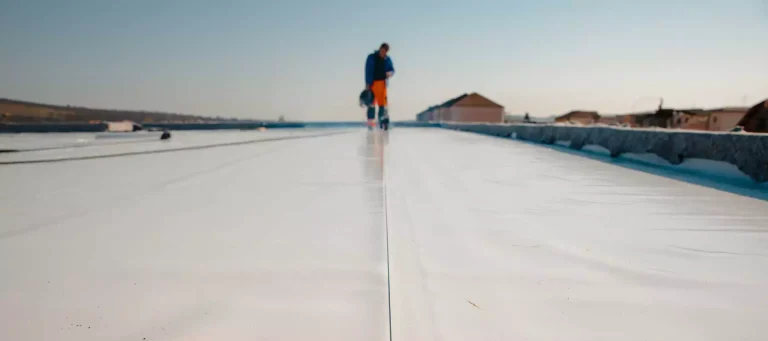
One of the most significant advantages of TPO roofing is its highly reflective white surface. TPO membranes can reflect up to 80 percent of solar energy, dramatically reducing cooling costs during the intense Texas summers. This reflectivity helps building owners meet increasingly stringent energy codes while lowering monthly utility expenses. As a GAF Master Elite contractor and GAF President’s Club award winner, we install TPO systems from GAF, an American-owned manufacturer that produces some of the highest-quality roofing materials in the industry.
Installation Methods and Best Practices
Proper installation is essential to maximizing the performance and longevity of any single-ply membrane system. Our trained crews install every roof to manufacturer specifications, ensuring warranty compliance and optimal results. The three primary installation methods for rubber and TPO roofing include:
- Fully adhered systems where the membrane is bonded directly to the roof deck or insulation using specialized adhesives, providing excellent wind uplift resistance
- Mechanically fastened systems where plates and screws secure the membrane at designated intervals, offering a cost-effective solution for many building types
- Ballasted systems where river-washed stone or concrete pavers hold the membrane in place, ideal for roofs with adequate structural load capacity
TPO seams are heat-welded using specialized hot-air equipment that fuses the membrane sheets together at temperatures between 900 and 1,100 degrees Fahrenheit. This creates a seam that is actually stronger than the membrane itself. EPDM seams, by contrast, are joined using adhesive tape or liquid adhesives, both of which have been refined over decades to deliver reliable, watertight bonds.
Why Choose Us for Your Membrane Roofing Project
As a RCAT licensed roofing contractor that is fully insured with both general liability and workers’ compensation coverage, we provide complete peace of mind throughout every project. Property owners in Houston, Memorial, Sugar Land, Missouri City, College Station, & Bryan, TX benefit from our detailed written work orders specifying all material and labor requirements, along with manufacturer-backed warranties and our own expressed workmanship warranties available in 10-year, 25-year, and 30-year terms. We maintain a fully staffed office to handle proper insurance billing, itemized invoices, and mortgage company endorsement processing. Your final bill is due only upon your complete satisfaction, reflecting our commitment to quality and accountability on every rubber and TPO roofing installation we perform.